
Ash Wednesday by Bishop Erik Varden
We associate Lent with self-denial. The association is correct. Self-denial is important. We must remember, though, that it is a means to an end. We are expert at making means into ends, and at redirecting them to other purposes. Self-denial can easily become self-serving, even as it is piously dressed up. Perhaps we’ve turned a little pudgy over Christmas, so think: Aha! During Lent I’ll make sure I lose some weight.
There’s nothing wrong about that. The Church gives us Lent so that we can form our formlessness, but let’s be honest: we don’t really fast for the love of God if we primarily have in mind how we’ll look in a bathing-suit this summer.
God calls us to the cleansing and renewal or our heart. That is the end our bodily ascesis should serve. The Gospel warns us against hypocrisy. It’s not about appearing devout or strict or serious. On the contrary, Christ stresses that our observance should be invisible.
Our attention is to be directed towards our Father in heaven. He is in secret and sees in secret. He sees through our costumes and masks, straight into the core of our being.
More than at any other time we need to be reminded of this, we who live in the world where so much is make-believe and where, again and again, what is essential is cast aside, or forgotten, in favour of virtuality, projection, or mere frippery.
‘Let your hearts be broken’, says the Prophet Joel, inviting us to repentance. The notion of ‘repentance’ can, in my experience, be a challenge to people. Perhaps you think, ‘OK, I know I did or said this thing or that, which I shouldn’t have done or said, but I don’t feel repentant.’ Perhaps you hesitate about going to confession, thinking that the feeling must come first? I’d say: what you feel or don’t feel has no importance at all. Repentance is primarily rational. Repentance is about recognizing that I have been deceitful, not lived up to an obligation, not given credible Christian witness. Confession provides, first and foremost, an occasion to be absolutely honest before God and with regard to myself. We might say that confession is a school in honest truthfulness. If we are honest, we know we shall be met with forgiving, transforming mercy. It is wonderful! Don’t miss the opportunity. If it’s been a while since you went to confession last, use this Lent to pick up the thread.
Joel speaks, too, about the priests who, between the vestibule and the altar, in the field of tension between the world and God’s presence, weep as they say: ‘Spare your people, Lord!’
To be a priest is to open one’s heart to that which pains others in order to bear this up towards the heart of God. It is to live in a state of resolute vulnerability. An ordained priest lives this mystery with especial intensity, strengthened by the grace of ordination, which he must allow to recharge him constantly, like a divine generator. Remember, though, that by baptism we have all been incorporated into a priestly people. Every Christian existence ought to be defined by growing compassion.
Today, on Ash Wednesday, we may ask: Do I deeply long for all God’s people to be spared? Am I distressed at the thought of others’ loss? Do I pray for others? Do I help and comfort them as best I can?
Or is my religion really a private business, an enterprise of self-improvement, like dieting?
In 1927, as part of a process of conversion, T.S. Eliot wrote a poem to which he gave the title Ash Wednesday. I first read it as a teenager. Some verses from it haunt me at the beginning of each Lent. Eliot summons up a gracious veiled nun. She walks, robed in white and blue, the color of Mary, in a garden. She symbolizes the faithful soul and the Church as such. She is beautiful, dignified, sublime. Then, weighty questions are put to her:
Will the veiled sister pray for
Those who walk in darkness, who chose thee and oppose thee?
Will the veiled sister between the slender
Yew trees pray for those who offend her
And are terrified and cannot surrender
And affirm before the world and deny between the rocks
In the last desert before the last blue rocks
The desert in the garden the garden in the desert
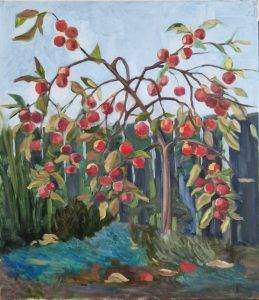
Of drouth, spitting from the mouth the withered apple-seed.
To follow Jesus into the wilderness in order to watch and pray for forty days; to be signed with ashes in recognition that we are dust, but dust into which God has breathed a living soul: this is to enter into God’s work of redemption. It is to own that each human being’s salvation concerns me personally.
Let us pray that we, this Lent, may be formed in profound compassion for man, man who, right now, is ever more conscious that the world’s garden has become a desert of drouth, and that the withered apple-seed of sin is really, over time, too meagre fare.
God is working the world’s redemption. He bids us work with him, in his name. May we be present and alert when he has need of us. May we embrace with our prayer those for whom he gave his life in love, who are so easily forgotten, who so easily forget. On their behalf we shall live and labor and love.
In the name of Christ! Amen.